Key Topic 2: Contributions
AZ may make contributions in a number of ways including:
- contributions to support the development or dissemination of guidelines (where AZ is not the primary supporter)
- contributions to support the medical or scientific education of external stakeholders, including education about healthcare systems and practices
- contributions to recipient organisations to support advances in medical or scientific research
- community investment contributions
Any contribution and the nature of such contribution (for example, financial or non-financial support) must be fully disclosed by the recipient, including written disclosure on any related materials, to ensure transparency.
An individual who formally represents an organisation may request a contribution from AZ on the organisation’s behalf. Contributions must not be given at the request of any other individual (for example, to a public official’s preferred charity), even if there is a legitimate need for the contribution.
Contributions must not be given directly to any individual or to any health professionals practice (that is, a group of health professionals owning and sharing the same premises or other resources), and must not be given for the personal benefit of any individual or any HCP practice selected by AZ.

Consider the following examples
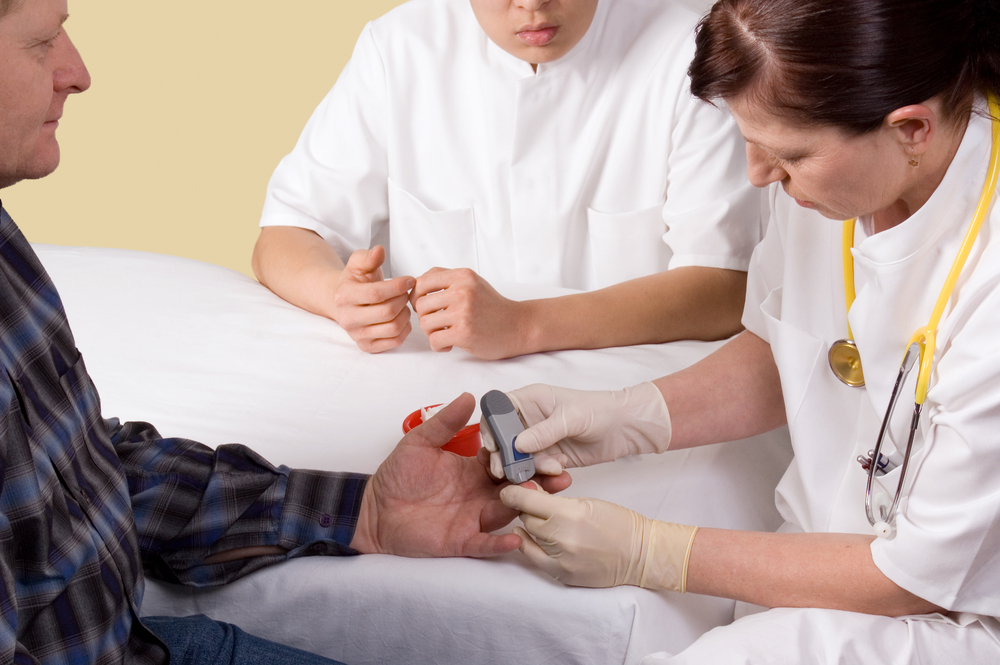
1 - Diabetes Network Support
In the UK in 2006 Lilly agreed to fund an educational post in a local diabetes clinical network for 2 years. The support was approved by Lilly’s Grants and Donations Committee. This committee was comprised of senior personnel from medical, legal and corporate affairs and the decision to grant any funding rested entirely with this committee. No member of sales or marketing formed part of the committee.
Lilly marketed various insulin products in the UK.
A sales representative for the insulin products called on a consultant who was a member of the diabetes clinical network.
During the call the representative allegedly implied that the funding of the educational post was to be reviewed and that managers were not happy with the current situation and that this funding would probably be under threat, since the hospital’s use of Lilly insulins had not increased. The representative was also reported to have said “we are basically paying you to use Novo Nordisk’s insulins”. (Novo Nordisk was a competitor company).
Which of the following statement do you agree with:
- It is reasonable for Lilly to review the funding of the educational post It is reasonable to review the funding after 2 years to make a decision on whether to continue funding. But this must be entirely unrelated to any product sales and should not involve sales personnel.
- The representative appears to have inappropriately linked the donation from Lilly to product sales
- If the representative was acting outside of Lilly’s instructions then the company cannot be at fault
Ruling
The consultant complained to the UK Authority stating that the representative’s comments were a threat to cut funding unless the department started to use Lilly’s insulins and that this was nothing short of blackmail. The Authority ruled that the representative had linked a company donation to the sale of its products and that this was unacceptable. Although the representative was acting outside of Lilly’s instruction or authority, the company was ruled to have brought discredit upon the pharmaceutical industry.
2 - Diet Clinic Support
In 2008 in the UK an article in the Financial Times alleged that Roche had sold large quantities of its product Xenical to the operator of a chain of private UK diet clinics, in spite of suspicion at one stage that the product was being sold illegally, and agreed to provide him with £55,000 for the purchase of another diet clinic.
On investigation the UK Authority established that Roche had sold Xenical to the owner of the chain of diet clinics but had not checked his professional status. In fact he was not a health professional, but was supplying the product to members of the public.
A document prepared by a Roche employee headed ‘Private Clinic Funding Proposal’ was discovered which referred to the funding of a new diet clinic. It stated that if Roche agreed to the proposal it was hoped to complete purchase of the diet clinic before the end of June 2003. The Private Clinic Funding Proposal also included sales analysis data for 2003 and 2004 showing the return on a £55,000 investment. The Private Clinic Funding Proposal referred to the diet clinics as ‘a real Xenical success story’. The owner was reported as having put enormous efforts into establishing Xenical across his group of clinics as the medicine of choice for safe and effective long-term weight loss.
The Panel noted that Roche had agreed to sponsor the purchase of a further clinic. Payment was to be in two parts, £20,000 payable in August 2004 and £35,000 in January 2005.

Which of the following statement do you agree with:
- The purchase of the clinic would be acceptable if there was no link to the sales of Xenical contributions should not be given to any individual for their personal benefit
- Funding a diet clinic which was not owned by a private individual could be acceptable
- The proposal should not have mentioned Xenical sales
- This funding would enhance patient care as obesity is a common health problem the owner was not a health professional and was not suitably qualified to prescribe and so there were patient safety issues here
Ruling
The Authority was extremely concerned about the circumstances which had led to a prescription only medicine in effect being supplied to a person who was not a health professional and by that person to patients. It was difficult to see how providing £55,000 to an individual to purchase a private diet clinic was a medical and educational good or service that would enhance patient care or benefit the NHS. The Panel considered that the arrangements brought discredit upon, and reduced confidence in, the pharmaceutical industry. This ruling was upheld on Appeal.